Department of
Microbiology
Architects of the Invisible World
The Department of Microbiology at Bangladesh Medical College (BMC) is committed to combating infectious diseases
through advanced diagnostic microbiology, infection control practices, and antimicrobial stewardship programs.
Our expert team specializes in identifying and characterizing bacterial, viral, fungal, and parasitic pathogens
using conventional and immunological techniques to guide appropriate treatment and prevent healthcare-associated
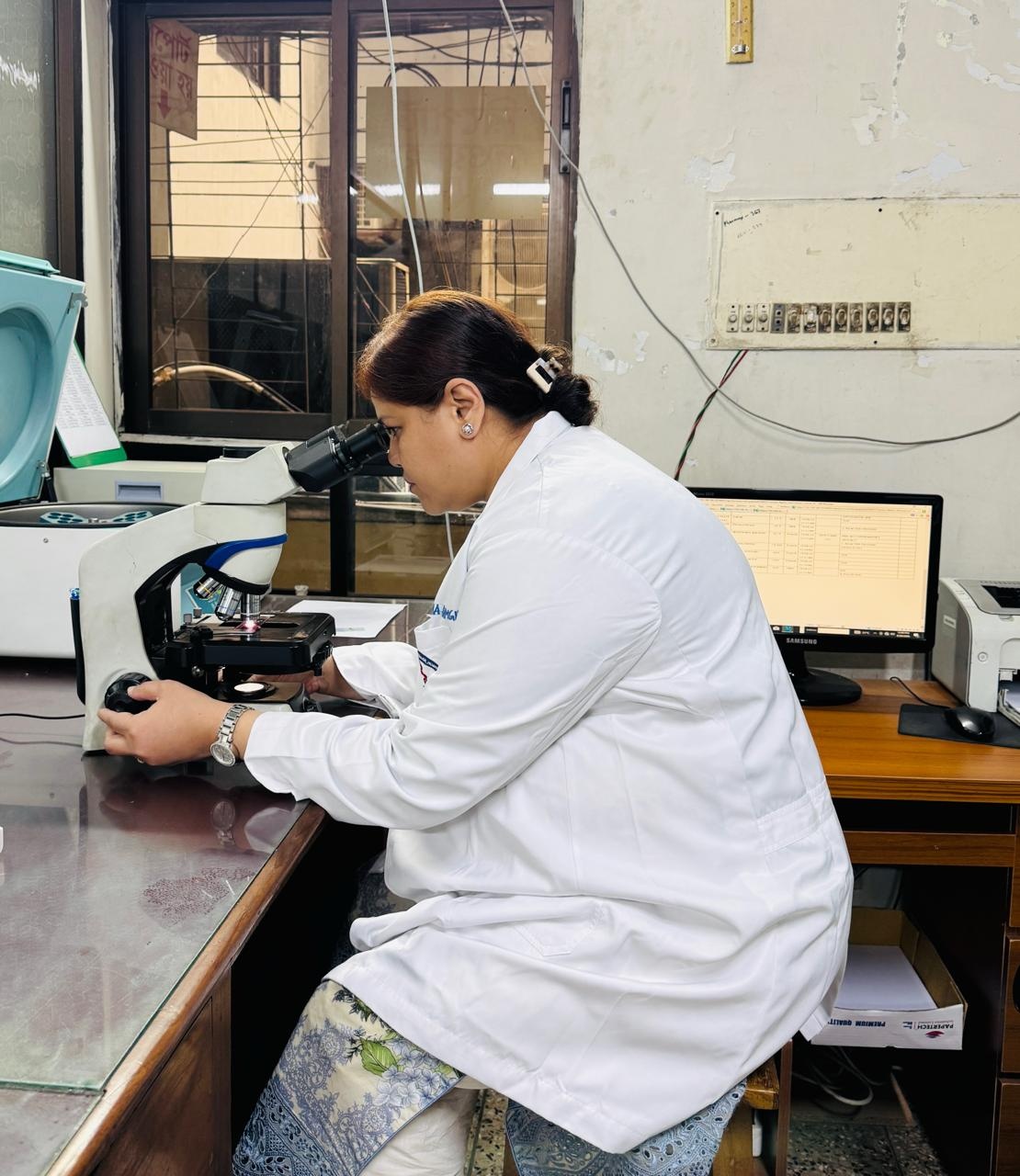
infections. Equipped with laboratories and automated blood culture systems, we provide comprehensive
microbiological services supporting clinical diagnosis. The department plays a pivotal role in training MBBS
students, postgraduate students, and laboratory personnel while contributing to antimicrobial resistance
research and outbreak investigations in our hospital.
Student Oriented Service
-
Student-Centered Approach:
This department adheres to the
DGME-approved curriculum
to ensure the highest standard for students.
-
Comprehensive Learning:
Expert faculty deliver a structured learning experience through interactive lectures,
tutorials, and hands-on practical sessions supported by modern teaching aids.
-
Integrated Teaching:
We implement interdisciplinary teaching modules, coordinating across departments and
phases to align with the MBBS Curriculum 2021 standards.
-
Antimicrobial Resistance Program:
Encourage students to participate in AMR programs through quiz competitions, debates,
and poster presentations to observe World AMR Awareness Day.
Diagnostic Capabilities
-
Bacteriology:
Identification and culture & sensitivity testing of aerobic bacteria.
Screening of MRSA, ESBL detection in case of hospital outbreak investigation and
according to requirements from different departments. Maintain ATCC strains for
quality control of laboratory. Fully automated system (BACTEC 9050 and BD BACTEC FX40
machines) is used for blood culture.
-
Virology:
Viral antigen detection and serology for different viral diseases.
-
Mycology:
Identification of different fungus by microscopy and culture.
-
Parasitology:
Microscopy and serological tests for diagnosis of parasitic disease.
-
Serology & Immunology:
Rapid tests, ELISA, and antibody detection for infectious disease.
Serological and immunological tests are done by fully automated machines
(HP-AFS/1-PLUS Hipro, MAGLUMI X3 and ADVIA Centaur CP).
-
Quality Assurance:
All laboratory procedures, biosafety protocols, and reporting comply strictly with
CLSI, CDC, and WHO standards.
We provide microbiology services with rapid turnaround times for critical samples and
actively participate in national antimicrobial resistance surveillance programs.
Specialized Diagnostic Capabilities
-
Outbreak Investigation:
Contact tracing and environmental sampling.
-
Infection Control Support:
Surveillance cultures, environmental monitoring.
Our department follows CLSI, CDC and WHO guidelines for laboratory biosafety,
quality management and report writing.
Infection Prevention & Antimicrobial Stewardship
-
Surveillance & Governance:
Lead Hospital Infection Control Committee activities, including evidence-based
surveillance for CAUTI, CLABSI, and other healthcare-associated infections (HAIs).
-
Antimicrobial Stewardship:
Implement and optimize antimicrobial stewardship programs in collaboration with
clinical departments to ensure appropriate antibiotic usage.
-
Outbreak Management:
Drive rapid investigation and containment strategies for hospital outbreaks.
-
Improvement Initiatives:
Partner with clinical teams to implement evidence-based practices that reduce HAI rate.
Educational & Research Contributions
-
IPC Training Programs:
Conduct comprehensive Infection Prevention and Control (IPC) training for healthcare workers.
-
Academic Instruction:
Deliver specialized training in medical microbiology and infectious diseases for
health care providers.
-
Postgraduate Residency:
Provide 2-week to 1-month clinical residencies for postgraduate students from
various private universities.
-
Workshops:
Conduct hands-on workshops focused on biosafety protocols, molecular techniques,
and Antimicrobial Susceptibility Testing (AST) methods for medical technologist.
-
Clinical Research:
Conduct ongoing research on institutional antimicrobial resistance (AMR) patterns.
-
Collaborative Research:
Engage in multi-center research regarding antibiotic susceptibility patterns across
diverse clinical samples.
-
Guideline Development:
Publish local antibiotic guidelines and surveillance data to guide clinical practice.
-
Network Participation:
Actively contribute to national reference laboratory networks and support WHO AMR
global action plan initiatives.
-
Reference Services:
Serve as a specialized referral center for complex microbiological investigations,
supporting peripheral and regional public health laboratories.
-
Publication:
Microbiology teachers have authored hundreds of studies in local and international journals,
documenting local antibiotic susceptibility data from a wide range of samples.